 Add to Chrome
 Add to Firefox
 Add to Edge
Euphonium: Steering Video Flow Matching via Process Reward Gradient Guided Stochastic Dynamics
Feb 04, 2026
While online Reinforcement Learning has emerged as a crucial technique for aligning flow matching models with human preferences, current approaches are hindered by inefficient exploration during training rollouts. Relying on undirected stochasticity and sparse outcome rewards, these methods struggle to discover high-reward samples, resulting in data-inefficient and slow optimization. To address these limitations, we propose Euphonium, a novel framework that steers generation via process reward gradient guided dynamics. Our key insight is to formulate the sampling process as a theoretically principled Stochastic Differential Equation that explicitly incorporates the gradient of a Process Reward Model into the flow drift. This design enables dense, step-by-step steering toward high-reward regions, advancing beyond the unguided exploration in prior works, and theoretically encompasses existing sampling methods (e.g., Flow-GRPO, DanceGRPO) as special cases. We further derive a distillation objective that internalizes the guidance signal into the flow network, eliminating inference-time dependency on the reward model. We instantiate this framework with a Dual-Reward Group Relative Policy Optimization algorithm, combining latent process rewards for efficient credit assignment with pixel-level outcome rewards for final visual fidelity. Experiments on text-to-video generation show that Euphonium achieves better alignment compared to existing methods while accelerating training convergence by 1.66x.

Making Avatars Interact: Towards Text-Driven Human-Object Interaction for Controllable Talking Avatars
Feb 02, 2026Generating talking avatars is a fundamental task in video generation. Although existing methods can generate full-body talking avatars with simple human motion, extending this task to grounded human-object interaction (GHOI) remains an open challenge, requiring the avatar to perform text-aligned interactions with surrounding objects. This challenge stems from the need for environmental perception and the control-quality dilemma in GHOI generation. To address this, we propose a novel dual-stream framework, InteractAvatar, which decouples perception and planning from video synthesis for grounded human-object interaction. Leveraging detection to enhance environmental perception, we introduce a Perception and Interaction Module (PIM) to generate text-aligned interaction motions. Additionally, an Audio-Interaction Aware Generation Module (AIM) is proposed to synthesize vivid talking avatars performing object interactions. With a specially designed motion-to-video aligner, PIM and AIM share a similar network structure and enable parallel co-generation of motions and plausible videos, effectively mitigating the control-quality dilemma. Finally, we establish a benchmark, GroundedInter, for evaluating GHOI video generation. Extensive experiments and comparisons demonstrate the effectiveness of our method in generating grounded human-object interactions for talking avatars. Project page: https://interactavatar.github.io
StreamAvatar: Streaming Diffusion Models for Real-Time Interactive Human Avatars
Dec 26, 2025Real-time, streaming interactive avatars represent a critical yet challenging goal in digital human research. Although diffusion-based human avatar generation methods achieve remarkable success, their non-causal architecture and high computational costs make them unsuitable for streaming. Moreover, existing interactive approaches are typically limited to head-and-shoulder region, limiting their ability to produce gestures and body motions. To address these challenges, we propose a two-stage autoregressive adaptation and acceleration framework that applies autoregressive distillation and adversarial refinement to adapt a high-fidelity human video diffusion model for real-time, interactive streaming. To ensure long-term stability and consistency, we introduce three key components: a Reference Sink, a Reference-Anchored Positional Re-encoding (RAPR) strategy, and a Consistency-Aware Discriminator. Building on this framework, we develop a one-shot, interactive, human avatar model capable of generating both natural talking and listening behaviors with coherent gestures. Extensive experiments demonstrate that our method achieves state-of-the-art performance, surpassing existing approaches in generation quality, real-time efficiency, and interaction naturalness. Project page: https://streamavatar.github.io .
ActAvatar: Temporally-Aware Precise Action Control for Talking Avatars
Dec 22, 2025Despite significant advances in talking avatar generation, existing methods face critical challenges: insufficient text-following capability for diverse actions, lack of temporal alignment between actions and audio content, and dependency on additional control signals such as pose skeletons. We present ActAvatar, a framework that achieves phase-level precision in action control through textual guidance by capturing both action semantics and temporal context. Our approach introduces three core innovations: (1) Phase-Aware Cross-Attention (PACA), which decomposes prompts into a global base block and temporally-anchored phase blocks, enabling the model to concentrate on phase-relevant tokens for precise temporal-semantic alignment; (2) Progressive Audio-Visual Alignment, which aligns modality influence with the hierarchical feature learning process-early layers prioritize text for establishing action structure while deeper layers emphasize audio for refining lip movements, preventing modality interference; (3) A two-stage training strategy that first establishes robust audio-visual correspondence on diverse data, then injects action control through fine-tuning on structured annotations, maintaining both audio-visual alignment and the model's text-following capabilities. Extensive experiments demonstrate that ActAvatar significantly outperforms state-of-the-art methods in both action control and visual quality.
SoliReward: Mitigating Susceptibility to Reward Hacking and Annotation Noise in Video Generation Reward Models
Dec 17, 2025Post-training alignment of video generation models with human preferences is a critical goal. Developing effective Reward Models (RMs) for this process faces significant methodological hurdles. Current data collection paradigms, reliant on in-prompt pairwise annotations, suffer from labeling noise. Concurrently, the architectural design of VLM-based RMs, particularly their output mechanisms, remains underexplored. Furthermore, RM is susceptible to reward hacking in post-training. To mitigate these limitations, we propose SoliReward, a systematic framework for video RM training. Our framework first sources high-quality, cost-efficient data via single-item binary annotations, then constructs preference pairs using a cross-prompt pairing strategy. Architecturally, we employ a Hierarchical Progressive Query Attention mechanism to enhance feature aggregation. Finally, we introduce a modified BT loss that explicitly accommodates win-tie scenarios. This approach regularizes the RM's score distribution for positive samples, providing more nuanced preference signals to alleviate over-focus on a small number of top-scoring samples. Our approach is validated on benchmarks evaluating physical plausibility, subject deformity, and semantic alignment, demonstrating improvements in direct RM evaluation metrics and in the efficacy of post-training on video generation models. Code and benchmark will be publicly available.
HunyuanVideo-HOMA: Generic Human-Object Interaction in Multimodal Driven Human Animation
Jun 10, 2025To address key limitations in human-object interaction (HOI) video generation -- specifically the reliance on curated motion data, limited generalization to novel objects/scenarios, and restricted accessibility -- we introduce HunyuanVideo-HOMA, a weakly conditioned multimodal-driven framework. HunyuanVideo-HOMA enhances controllability and reduces dependency on precise inputs through sparse, decoupled motion guidance. It encodes appearance and motion signals into the dual input space of a multimodal diffusion transformer (MMDiT), fusing them within a shared context space to synthesize temporally consistent and physically plausible interactions. To optimize training, we integrate a parameter-space HOI adapter initialized from pretrained MMDiT weights, preserving prior knowledge while enabling efficient adaptation, and a facial cross-attention adapter for anatomically accurate audio-driven lip synchronization. Extensive experiments confirm state-of-the-art performance in interaction naturalness and generalization under weak supervision. Finally, HunyuanVideo-HOMA demonstrates versatility in text-conditioned generation and interactive object manipulation, supported by a user-friendly demo interface. The project page is at https://anonymous.4open.science/w/homa-page-0FBE/.
HunyuanVideo-Avatar: High-Fidelity Audio-Driven Human Animation for Multiple Characters
May 26, 2025Recent years have witnessed significant progress in audio-driven human animation. However, critical challenges remain in (i) generating highly dynamic videos while preserving character consistency, (ii) achieving precise emotion alignment between characters and audio, and (iii) enabling multi-character audio-driven animation. To address these challenges, we propose HunyuanVideo-Avatar, a multimodal diffusion transformer (MM-DiT)-based model capable of simultaneously generating dynamic, emotion-controllable, and multi-character dialogue videos. Concretely, HunyuanVideo-Avatar introduces three key innovations: (i) A character image injection module is designed to replace the conventional addition-based character conditioning scheme, eliminating the inherent condition mismatch between training and inference. This ensures the dynamic motion and strong character consistency; (ii) An Audio Emotion Module (AEM) is introduced to extract and transfer the emotional cues from an emotion reference image to the target generated video, enabling fine-grained and accurate emotion style control; (iii) A Face-Aware Audio Adapter (FAA) is proposed to isolate the audio-driven character with latent-level face mask, enabling independent audio injection via cross-attention for multi-character scenarios. These innovations empower HunyuanVideo-Avatar to surpass state-of-the-art methods on benchmark datasets and a newly proposed wild dataset, generating realistic avatars in dynamic, immersive scenarios.
Audio-visual Controlled Video Diffusion with Masked Selective State Spaces Modeling for Natural Talking Head Generation
Apr 03, 2025Talking head synthesis is vital for virtual avatars and human-computer interaction. However, most existing methods are typically limited to accepting control from a single primary modality, restricting their practical utility. To this end, we introduce \textbf{ACTalker}, an end-to-end video diffusion framework that supports both multi-signals control and single-signal control for talking head video generation. For multiple control, we design a parallel mamba structure with multiple branches, each utilizing a separate driving signal to control specific facial regions. A gate mechanism is applied across all branches, providing flexible control over video generation. To ensure natural coordination of the controlled video both temporally and spatially, we employ the mamba structure, which enables driving signals to manipulate feature tokens across both dimensions in each branch. Additionally, we introduce a mask-drop strategy that allows each driving signal to independently control its corresponding facial region within the mamba structure, preventing control conflicts. Experimental results demonstrate that our method produces natural-looking facial videos driven by diverse signals and that the mamba layer seamlessly integrates multiple driving modalities without conflict.
HunyuanPortrait: Implicit Condition Control for Enhanced Portrait Animation
Mar 25, 2025We introduce HunyuanPortrait, a diffusion-based condition control method that employs implicit representations for highly controllable and lifelike portrait animation. Given a single portrait image as an appearance reference and video clips as driving templates, HunyuanPortrait can animate the character in the reference image by the facial expression and head pose of the driving videos. In our framework, we utilize pre-trained encoders to achieve the decoupling of portrait motion information and identity in videos. To do so, implicit representation is adopted to encode motion information and is employed as control signals in the animation phase. By leveraging the power of stable video diffusion as the main building block, we carefully design adapter layers to inject control signals into the denoising unet through attention mechanisms. These bring spatial richness of details and temporal consistency. HunyuanPortrait also exhibits strong generalization performance, which can effectively disentangle appearance and motion under different image styles. Our framework outperforms existing methods, demonstrating superior temporal consistency and controllability. Our project is available at https://kkakkkka.github.io/HunyuanPortrait.
HunyuanVideo: A Systematic Framework For Large Video Generative Models
Dec 03, 2024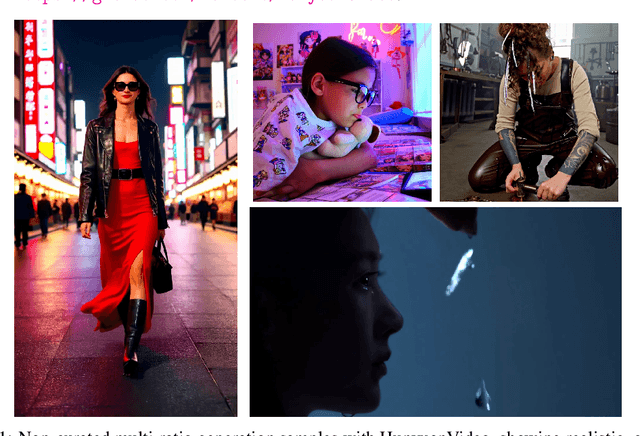
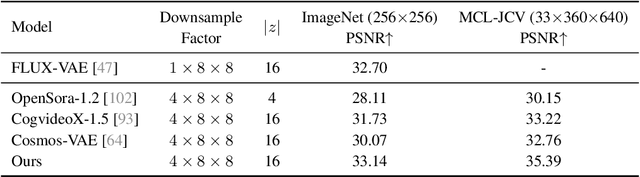
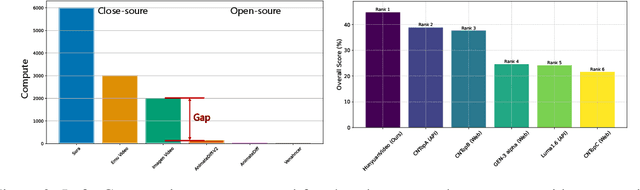

Recent advancements in video generation have significantly impacted daily life for both individuals and industries. However, the leading video generation models remain closed-source, resulting in a notable performance gap between industry capabilities and those available to the public. In this report, we introduce HunyuanVideo, an innovative open-source video foundation model that demonstrates performance in video generation comparable to, or even surpassing, that of leading closed-source models. HunyuanVideo encompasses a comprehensive framework that integrates several key elements, including data curation, advanced architectural design, progressive model scaling and training, and an efficient infrastructure tailored for large-scale model training and inference. As a result, we successfully trained a video generative model with over 13 billion parameters, making it the largest among all open-source models. We conducted extensive experiments and implemented a series of targeted designs to ensure high visual quality, motion dynamics, text-video alignment, and advanced filming techniques. According to evaluations by professionals, HunyuanVideo outperforms previous state-of-the-art models, including Runway Gen-3, Luma 1.6, and three top-performing Chinese video generative models. By releasing the code for the foundation model and its applications, we aim to bridge the gap between closed-source and open-source communities. This initiative will empower individuals within the community to experiment with their ideas, fostering a more dynamic and vibrant video generation ecosystem. The code is publicly available at https://github.com/Tencent/HunyuanVideo.